Trending Forward: How AI is Transforming Pharmaceutical R&D
The shift from experimentation to predictive discovery. Investing Insights from the Sustainable Equity Team

In Brief
- AI has the potential to reverse decades of declining healthcare R&D productivity by reducing costs, accelerating development timelines, and improving success rates.
- The opportunity extends beyond drug discovery, creating opportunities for pharma leaders, healthcare technology firms, medical device companies, and digital infrastructure providers.
- As healthcare shifts from trial-and-error experimentation to predictive discovery, AI could accelerate medical innovation while improving patient outcomes.
Healthcare research and development (R&D) remains one of the largest productivity gaps in the global economy. Drug development is a lengthy and resource-intensive process that has historically relied on human experimentation and observation. DEVELOPING A NEW MEDICINE TYPICALLY TAKES 10 TO 15 YEARS, AND APPROXIMATELY 92% OF CLINICAL CANDIDATES FAIL BEFORE REACHING THE MARKET.1
Artificial intelligence has the potential to transform healthcare R&D from an experimental science into a more data-driven and engineering-based discipline. By reducing costs, accelerating development timelines, and improving success rates, AI could enhance research productivity and reshape the economics of healthcare innovation. This shift is creating opportunities for pharma leaders, emerging healthtech firms, and the broader ecosystem of technology and life sciences companies supporting healthcare innovation.
Accelerating Productivity and Innovation Healthcare R&D productivity has been declining for decades.
Despite advances in science and research technologies, developing new medicines has become increasingly costly and time-consuming. As effective generic medicines have become widely available, the threshold for meaningful innovation has risen, and R&D has shifted toward more complex diseases with lower clinical success rates and less predictive research models. The number of new drugs approved per billion dollars of R&D spending has roughly halved every nine years since 1950, this phenomenon is known as Eroom's Law.2 AI has the potential to reverse this trend by improving how drug candidates are identified, evaluated, and prioritized, shifting drug discovery from a largely trial-and-error process toward a more predictive, automated process. If successfully scaled across the industry, AI could help improve R&D efficiency and accelerate the pace of medical innovation
DEVELOPING A SINGLE NEW PHARMACEUTICAL PRODUCT NOW COSTS UPWARDS OF $3.5 BILLION.3
GLOBAL PHARMACEUTICAL R&D SPENDING HAS NEARLY DOUBLED SINCE 2016, REACHING AROUND 300 BILLION U.S DOLLARS IN 2025.4 Increasing R&D productivity could improve returns on healthcare investment, accelerate the development of innovative therapies, and help address unmet medical needs more quickly. Faster discovery cycles, lower development costs, and higher success rates have the potential to enhance returns on invested capital while accelerating the delivery of innovative therapies to patients. Over time, this could improve the economics of healthcare innovation, benefiting both patients and shareholders.
AI has the potential to improve R&D productivity by:
• Reducing costs: AI can improve target identification, optimize molecule design, predict toxicity earlier, and help eliminate low probability drug candidates before they enter costly clinical trials.
• Accelerating timelines: AI can streamline clinical trial design, improve patient recruitment, automate data analysis, and support regulatory documentation, helping bring new therapies to market faster.
• Improving success rates: By analyzing large biological datasets and identifying patterns beyond human capabilities, AI can help researchers select more promising drug targets, compounds, and patient populations.
While no fully AI-discovered drug has yet reached market approval, we believe the greater long-term opportunity lies less in generating more molecules, and more in improving decision-making across the R&D process. By helping researchers identify the most promising candidates earlier and avoid costly late-stage failures, AI can improve development efficiency. Additionally, AI is expanding the healthcare R&D ecosystem beyond traditional pharmaceutical companies. Technology companies are becoming increasingly important providers of the data infrastructure, cloud computing, and computational power required to support AI enabled research. At the same time, new healthcare technology firms are emerging with business models focused on AI-driven drug discovery, diagnostics, and clinical development. While AI represents a significant opportunities for productivity, it also introduces new competitive pressures. By lowering the cost and time required to develop new therapies, AI could enable smaller, AI-native firms to compete more effectively alongside established pharmaceutical companies. However, drug development remains highly regulated and depends on clinical expertise, successful trial execution, regulatory approval, large-scale manufacturing, and the ability to commercialize medicines globally. We therefore expect AI to redefine industry leadership rather than disrupt it entirely, shifting the competitive advantage toward companies with superior data, AI capabilities, and development expertise.
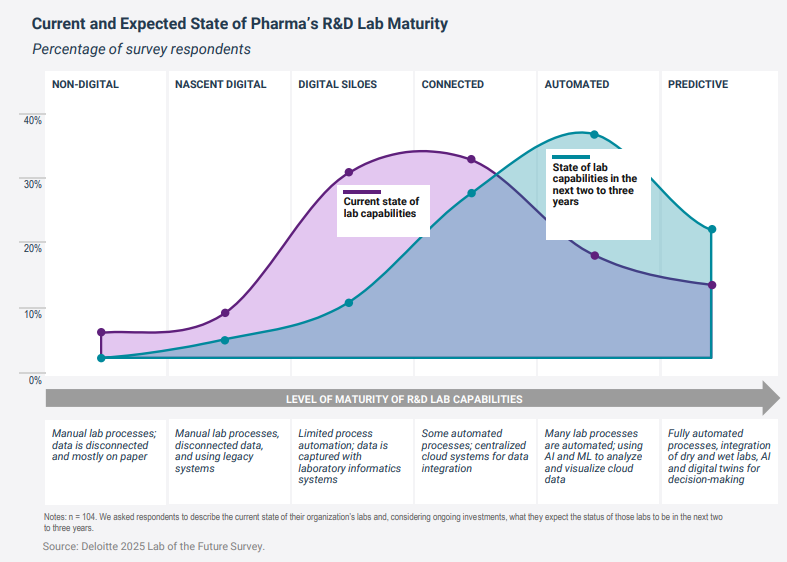
Key Enablers and Beneficiaries
PHARMA: Leading pharmaceutical companies are increasingly using AI to improve drug discovery, pathology, and clinical development.
- ASTRAZENECA has expanded its AI capabilities through investments in quantitative pathology, biomarkers, and AI-enabled drug discovery partnerships.
- ELI LILLY has made significant investments in AI infrastructure and collaborations, reflecting its ambition to accelerate drug development and improve research productivity.
TECHNOLOGY: The growth of AI in healthcare depends on a robust digital infrastructure. Technology companies provide the computing power, scientific models, cloud platforms, and data-management capabilities that enable AI driven research.
- ALPHABET has built one of the broadest healthcare AI research and development footprints.
- NVIDIA serves as a critical enabler by supplying the advanced computing infrastructure used across the healthcare industry, partnering with pharmaceutical companies to support AI-powered drug discovery, clinical research, and precision medicine initiatives.
- MICROSOFT has developed a generative deep-learning system, BioEmu, to accelerate drug discovery and help reduce failure rates in clinical trials.
LIFE SCIENCES: Provide the instruments, diagnostics, and analytical capabilities that support AI-enabled research, clinical development, and patient care.
- DANAHER & THERMO FISHER are leading life sciences tools companies that provide equipment and services used throughout the drug development process. AI-driven gains in R&D productivity and pipeline success rates could support increased demand for the company's research and laboratory solutions.
MEDICAL DEVICE: Provide specialized treatment equipment and diagnostic and monitoring technologies that utilize AI to accelerate innovation. By generating large volumes of high-quality patient data through imaging systems, procedure recordings, and connected devices, they are becoming critical enablers of a more personalized and data driven healthcare ecosystem.
- EDWARDS LIFESCIENCES & BOSTON SCIENTIFIC are using AI to optimize medical imaging workflows and develop product platforms in cardiology and endoscopy that integrate intelligence to streamline processes and improve individual clinical outcomes.
Responsible Practices
Beyond accelerating drug discovery and innovation, AI can strengthen risk management across the healthcare value chain. It can enhance pharmacovigilance by identifying safety signals, streamlining regulatory compliance, and improving post-market drug safety monitoring. These capabilities strengthen quality oversight and help lower exposure to litigation and regulatory sanctions and recalls. More productive R&D will also optimize manufacturing processes and supply chains by improving resource efficiency, reducing energy and water consumption, minimizing material inputs, and lowering waste generation. In addition, AI can help researchers prioritize the most promising candidates earlier in the development process, improving decision-making, and reducing development risk. AI can also support safer medicines and reduce reliance on animal testing by using computational models to predict efficacy and toxicity earlier and help researchers prioritize the most promising candidates.
AI has the potential to deliver important social and ethical benefits. Advanced computational models can help predict safety and toxicity earlier in the development process, reducing reliance on animal testing while accelerating research and lowering development costs. In addition, AI could also play an important role in expanding access to healthcare by supporting better patient outcomes and expanding access to treatment. Realizing these benefits, however, will require robust validation, regulatory oversight, and continued investment in healthcare and digital infrastructure.
The securities mentioned above are shown for illustrative purpose only and should not be considered as a recommendation or a solicitation to buy or sell. This information is intended for non-professional and professional clients as defined by MiFID.
1Sun, D. et al. Why 90% of clinical drug development fails and how to improve it? Acta Pharm. Sin. B 12, 3049–3062 (2022).
2OECD, Artificial Intelligence in Science: Eroom’s Law and the Decline in the Productivity of Biopharmaceutical R&D. The reported data reflect the situation as of the date of this document and are subject to change without notice. This information is intended for non-professional and professional clients as defined by MiFID.
3Kenneth D.S. Fernald, Philipp C. Förster, Eric Claassen, Linda H.M. van de Burgwal, The pharmaceutical productivity gap – Incremental decline in R&D efficiency despite transient improvements, Drug Discovery Today, 2024.
3Statista, Pharmaceutical Research and Development (R&D) – Statistics & Facts, May 2026. This information is intended for non-professional and professional clients as defined by MiFID.

Laura FAUVEAU
Financial Analyst

Manon SALOMEZ
Impact & ESG Analyst


Mirova, an affiliate of Natixis Investment Managers dedicated to sustainable investing, today announced a strengthened leadership structure designed to support the firm’s next phase of development and further reinforce its position as one of the world's foremost sustainable investment managers.

Climate, Nature and Sustainability Report (LEC 29, TCFD, TNFD)