Trending Forward: Beyond the Disruption
The evolution and future of software
Investing Insights from the Sustainable Equity Team

In Brief
- AI is reshaping software business modelswith generative and agentic AI accelerating disruption while also expanding long-term opportunities across the sector.
- Investor sentiment has shifted from early AI optimism to concerns about structural risks, leaving many software stocks under pressure.
- We focus on companies best positioned to adapt and capture value,including those with deep domain expertise, strong data, vertical integration across the stack, and sustained product innovation.
Global software companies are entering a phase of transition as artificial intelligence reshapes digital business models, presenting both opportunities and challenges. Since the start of the generative AI cycle, software stocks have been under pressure as investor sentiment has shifted from optimism about AI's potential, to heightened concerns about the structural risks threatening software companies.
Recently, AI agents have allowed anyone to access autonomous systems that can analyze, plan, and complete tasks with little human supervision. Vibe coding allows people without programming experience to create any software application they can conceptualize. Meanwhile, venture capital and private equity investors with software exposure have warned the public that many software companies will be disrupted and need their valuations cut.
The software ecosystem is complex, and AI’s impact varies across categories, offering both benefits and risks. To navigate the changing landscape, we are focusing on the fundamentals and identifying companies that are positioned to benefit from AI’s momentum. We believe that adaptation is crucial for software companies in today’s market and the firms that fail to innovate risk being outpaced by competitors.
Key Figures
said they believe AI will fundamentally change their business model in the next three to five years.
could be generated by generative AI worldwide, of which $440–$660 billion is expected to accrue to software companies (10–15%). The emergence of agentic AI points to even greater upside.
The introduction of AI-driven innovations has lowered the barrier to entry in the software ecosystem, allowing a new generation of AI-native companies to challenge established players as well. As a result, leading software firms are prioritizing AI integration throughout their operations and product offerings to maintain relevance and drive sustained growth. AI continues to stand out as a powerful, long-term theme offering opportunities across the technology sector. Our thematic approach focuses on companies that are positioned to benefit from long-term megatrends that are reshaping our economy.
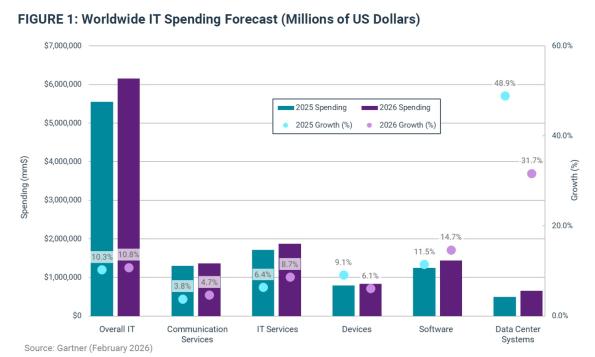
The software ecosystem is multi-dimensional, extending far beyond coding alone. Critical elements like security, maintenance, integration, and regulatory compliance, as well as deep process expertise, create layers of differentiation and resilience within the industry.
Generative and agentic AI can act as a powerful catalyst, but companies must adapt to stay competitive. Adoption will vary and performances will be mixed, which is why we focus on several key indicators:
- Industry Expertise: Companies with extensive experience and sector knowledge that can create tailored solutions that address specific industry challenges and requirements.
- Data Ownership: Companies that manage enterprise data have a significant advantage, as proprietary datasets are essential for robust AI models.
- Vertical Integration: Companies that operate across all layers of software, can optimize use of AI agents and drive great value capture.
- Product Innovation: Companies that maintain strong product innovation across the tech stack are best positioned to drive transformation and keep a competitive advantage.
The Software Ecosystem: Opportunities and Risks
System of Record (SoR): The system that helps businesses manage and store their information. It is the most defensible software subsector, as the data in the SoR is the authoritative source on which AI systems rely for training and inference1. For this reason, companies increasingly looking to integrate AI on top of their core platform.
Application Software: Designed for end-users, these programs (e.g., productivity, communication, workflow tools) are the easiest to replace with vibe coding and agents1. While seat-based pricing models face risks, firms that leverage AI can expand their market and defend pricing.
Vertical Software: Purpose-built for specific industries or niche markets, offering specialized features that often serve as a system of record. AI enhances the value of these products by leveraging industry-specific datasets, regulatory compliance, and workflows, making them strong beneficiaries of the AI landscape. However, AI-native entrants may attempt to target this category with faster or cheaper alternatives.
Infrastructure Software: The backbone of an IT system, including operating systems, databases, networking, and security tools. A clear AI winner, as AI workloads require much more network traffic, storage, cloud migration, and data warehousing and observability compared to traditional workloads1. Risks come from open-source or vendor-neutral competitors.
Cyber Security Software: Designed to protect information systems and data, cybersecurity software benefits structurally from AI. AI enhances defensive capabilities, detection, prediction, and automated containment. However, AI also increases attack surfaces and lowers the barriers for cybercriminals, requiring robust defense strategies.
Company Examples
- Salesforce: A well-established provider in CRM software and business processes, Salesforce has fully embraced AI with its AgentForce platform. Its decades of enterprise data acting as a system of record is a strong competitive advantage.
- Palo Alto Networks: Offers a comprehensive suite of security products, securing IT and AI ecosystems. The company seeks to maintain its competitive edge through M&A and has embedded generative AI in network security for faster detection and response.
- Microsoft: Diversified across the AI stack, including Copilot across office products, Github for code generation, the Dynamic 365 system of record, an AI-native Windows OS, a cybersecurity suite, and Azure through GPU IaaS and companies transitioning to the cloud. Microsoft incorporates OpenAI into its service offering and hosts them as a client.

Responsible Practices
The deployment of AI inevitably raises major questions regarding ethics, transparency, and governance. Its impact on work models, data management, and algorithmic biases necessitates a rigorous framework to ensure that it contributes to sustainable and inclusive progress.
We participate in collective initiatives and engage with companies directly to implement policies and mechanisms to ensure the ethical development and application of AI, guided by respect for human rights and the principle of leaving no one behind. We specifically ask that companies implement, demonstrate, and publicly disclose:
- a set of ethical principles that guide the company’s development, deployment, and/or procurement of AI tools;
- strong AI governance and oversight across the value chain of AI development and use;
- how these responsible AI principles are implemented via specific tools and programs of action relevant to the company’s business model, including on the product and service level;
- impact assessmentprocesses applied to AI, emphasizing human rights impact assessments (HRIAs), especially in high-risk use cases.
Collective Engagement Initiatives
Coalition for Collective Impact of the Global Benchmarking Alliance for Ethical AI
Aims to enhance transparency among technology companies concerning their use of AI and the integration of responsible principles into their development.
Coalition for Sustainable AI
Aims to positively contribute to the development and use of AI in support of global sustainability goals with a focus on environmental policies.

Joseph TOSCANO
Equity Analyst, CFA*
The securities mentioned above are shown for illustrative purpose only and should not be considered as a recommendation or a solicitation to buy or sell. The information provided reflects MIROVA’s opinion as of the date of this document and is subject to change without notice. The reported data reflect the situation as of the date of this document and are subject to change without notice.
*CFA® & Chartered Financial Analyst® are registered trademarks owned by the CFA Institute. The securities mentioned above are shown for illustrative purpose only and should not be considered as a recommendation or a solicitation to buy or sell.

The shift from experimentation to predictive discoveryInvesting Insights from the Sustainable Equity Team

Mirova, an affiliate of Natixis Investment Managers dedicated to sustainable investing, today announced a strengthened leadership structure designed to support the firm’s next phase of development and further reinforce its position as one of the world's foremost sustainable investment managers.

Climate, Nature and Sustainability Report (LEC 29, TCFD, TNFD)